

Most tree care companies don't start with software built for tree work. They start with QuickBooks, a shared calendar, a whiteboard in the shop, and a stack of paper estimates. Later they try a general field service app built for plumbers, cleaners, or lawn crews.
That setup works until it doesn't. A removal gets scheduled without the crane. A crew shows up to a job the climber wasn't told about. An estimate written in the driveway never makes it into the office. The software isn't broken. It just wasn't built for the way tree work runs.
This article covers why generic business tools fall short for tree service companies, and what tree care business management software actually has to handle before it's worth your crews' time.
Why generic business software struggles with tree work
Generic tools assume a job is one person, one visit, one price. Tree work rarely fits that mold. Here's where the gaps show up first.
Jobs depend on equipment, not just people
A removal might need a bucket truck, a chipper, a stump grinder, and sometimes a crane. Generic schedulers book a person into a time slot. They don't know the grapple truck is already committed across town.
Crews have skills that matter
Not every crew member can climb, run the crane, or do plant health care. A calendar that treats every employee the same leaves the scheduler doing that matching from memory.
Estimates happen in the field
Tree work is sold in a customer's yard, often tree by tree, with photos, notes about access, and hazards near power lines or structures. Office-first tools make salespeople re-type everything later, and details get lost.
One customer, many jobs over many years
A property may need a pruning this fall, a removal next spring, and a plant health care program after that. Generic CRMs track contacts, not trees and properties over time.
Weather and emergencies reshuffle the week
Storm work and rain days blow up a schedule overnight. Software built for fixed appointments makes rescheduling slow and error-prone.
The data lives in too many places
When estimating, scheduling, invoicing, and payroll each sit in a separate app, the office spends hours copying data between them. Every copy is a chance for a mistake.
What tree care business management software must handle
If you're comparing arborist software, use these six workflows as your baseline. A tool that misses any of them will push work back onto your office staff.
1. Estimating in the field
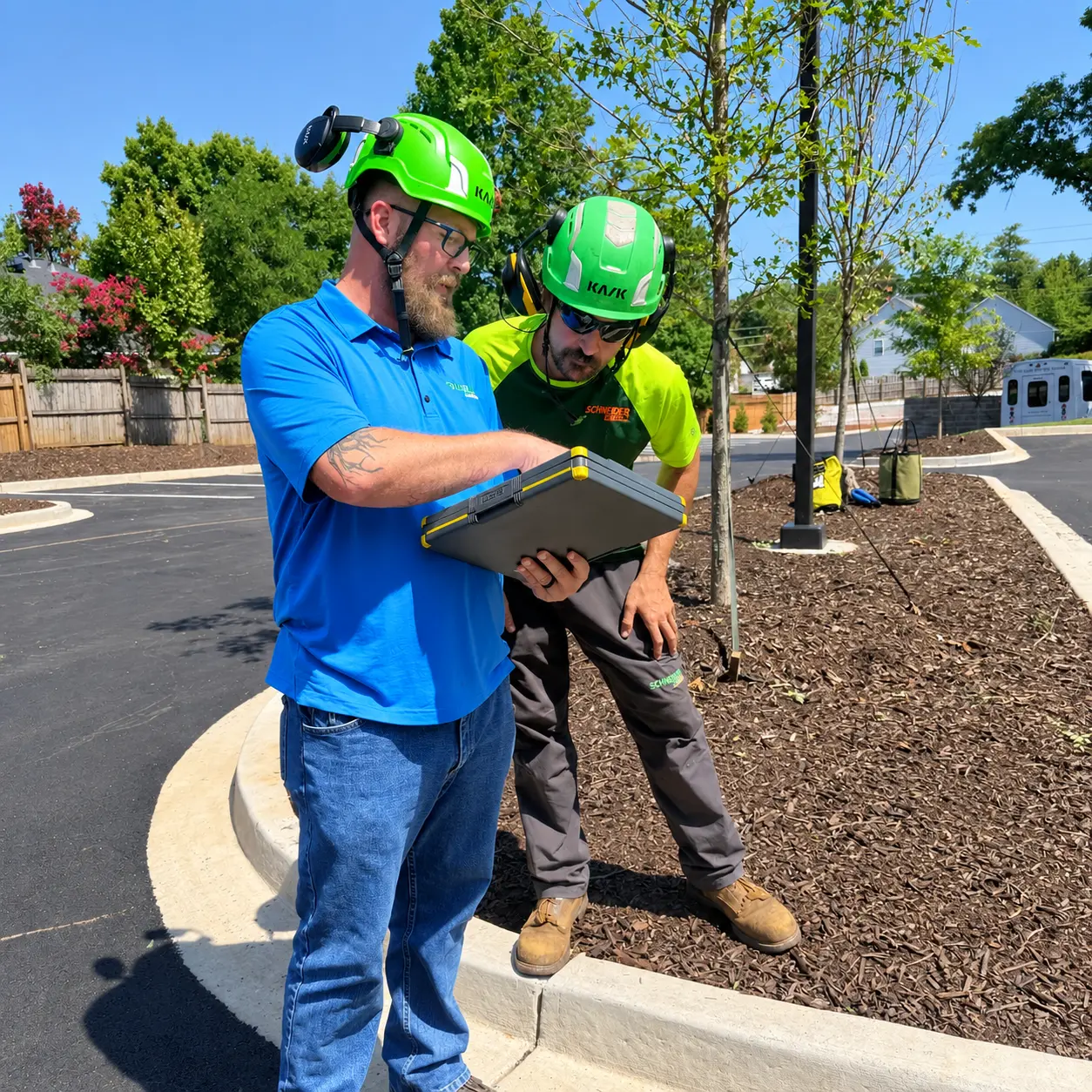
Your sales team should be able to build an estimate on site, tree by tree, with photos, notes, and pricing. The customer should be able to review and approve it without a second trip. Once approved, the estimate should become a job automatically. No re-typing.
2. Job scheduling built around crews and equipment
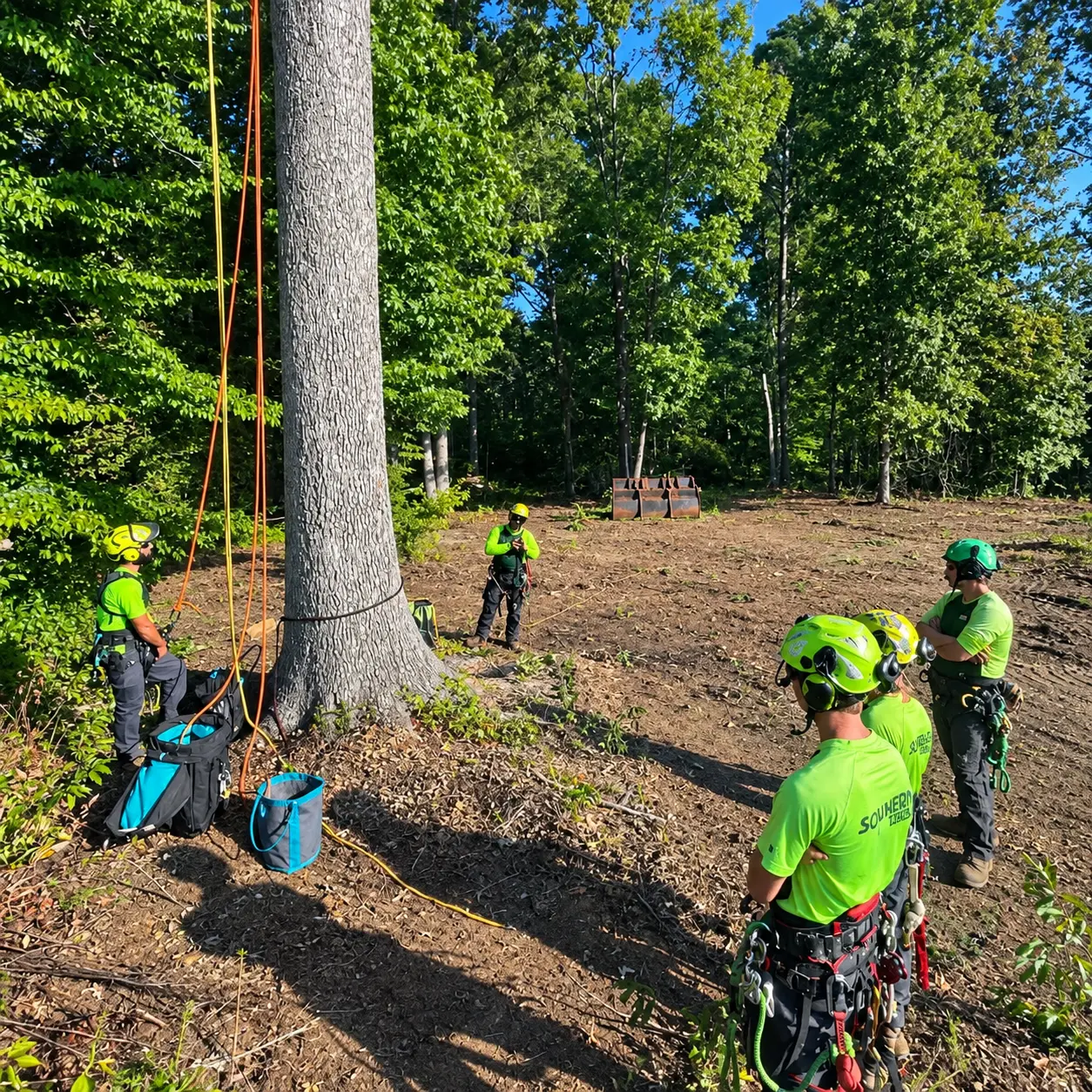
Good job scheduling for tree service means booking the right crew and the right equipment together. Look for a crew calendar that shows who is qualified for what, which trucks are available, and how long each job should take. When rain cancels Tuesday, moving the whole day should take minutes, not an afternoon.
3. Routing and dispatch
Tree crews lose hours to windshield time. Your software should show jobs on a map, group them sensibly, and route crews so they aren't crossing the county twice in one day. Dispatchers should see where every crew is working at a glance.
4. Work order management
The work order is what your crew foreman actually reads. It should carry everything from the estimate: which trees, what work, access notes, hazards, photos, and required equipment. Crews should be able to update it from the field, mark work complete, and add notes for the office. Clear work order management is the difference between a clean job and a callback.
5. Customer and property history
Tree service management is a long game. You need every property's history in one place: past work, open estimates, follow-up recommendations, and plant health care schedules. That history is how you turn a one-time removal into a repeat customer.
6. Invoicing and the numbers behind the business
When the job is marked complete, the invoice should be ready to send. Owners should be able to see sold work, scheduled work, and completed revenue without building a spreadsheet. If it syncs with your accounting, even better.
Questions to ask before you buy
Take these into every demo. Ask the vendor to show you, not tell you.
- Can my estimator build and send an estimate from the customer's yard, tree by tree, with photos?
- Does an approved estimate become a scheduled job without anyone re-entering it?
- Can I schedule crews and equipment together, and see conflicts before they happen?
- How fast can I move a full day of jobs when weather hits?
- Does the routing actually cut drive time, and can dispatch see crews on a map?
- What does my crew foreman see on the work order, and can they update it from the field?
- Can I pull up a property's full history in one screen?
- Who built this, and have they ever run a tree crew?
That last question matters more than it sounds. Industry-specific business software is only as good as its builders' understanding of the industry. Software designed by people who have scheduled a crane around a storm week will handle the edge cases you live with every day.
Software designed by people who have scheduled a crane around a storm week will handle the edge cases you live with every day.
Why Mantx: software for tree people, by tree people
Mantx was built inside Schneider Tree Care, one of the largest family-owned tree services in the Carolinas. We didn't study tree companies from the outside. We built the tool we needed to run our own crews, then refined it on real jobs, real storms, and real Monday mornings.
That's why Mantx is all-in-one tree care business management software, not a generic app with a tree icon on it:
- Field estimating that turns into scheduled work without re-entry
- A crew calendar that books crews and equipment together
- Auto-routing and map dispatch so crews spend less time driving
- Work orders that carry every detail from the estimate to the foreman
- Customer and property history in one place
- Invoicing and a live dashboard so owners see the business at a glance
If you've tried software before and ended up back on the whiteboard, we get it. Mantx was built by people who've been there.
Frequently asked questions
Why do tree care companies struggle with generic business management software?
Generic tools are built for simple, one-visit jobs. Tree work depends on specialized crews, heavy equipment, field estimates, and schedules that shift with weather. Generic software can't track those together, so the office fills the gaps by hand.
What is tree care business management software?
It's software built specifically for tree service companies. It connects estimating, job scheduling, routing, work orders, customer history, and invoicing in one system.
What's the difference between arborist software and a general field service app?
Arborist software understands tree-specific work: tree-by-tree estimates, crew qualifications, equipment like cranes and chippers, and long-term property care. General field service apps treat every job like a standard appointment.
When should a tree company switch from spreadsheets and QuickBooks?
Usually when the office spends more time copying data than moving jobs forward, or when scheduling mistakes start costing you callbacks and drive time.
See how Mantx runs a tree company
Want to see the workflows above on real tree jobs? Book a demo and we'll walk you through it.
Book a Demo